Brazil NORMAM-401/DPC Biofouling Regulation
- Marine Decarb
- Jun 25
- 3 min read

Published by the Brazilian Navy's Directorate of Ports and Coasts (DPC) to protect marine ecosystems and prevent the transfer of invasive aquatic species, the NORMAM-401/DPC regulation introduces clear and strict standards for ships operating in Brazilian waters. This rule, for which penal sanctions will be fully enforced as of June 2026, contains critical limits that shipowners must pay attention to, particularly regarding Under Water Cleaning (UWC) operations and vessel sailing speeds.

Which Ships Are Covered by the Rule?
The NORMAM-401/DPC regulation applies to all commercial vessels over 24 meters in length that will enter Brazilian Jurisdictional Waters (AJB) or navigate between different marine biogeographic regions within Brazil (excluding non-commercial government vessels and exempted offshore platforms).
UWC, Sailing Speed, and Validity Rules for Ships Bound for Brazil
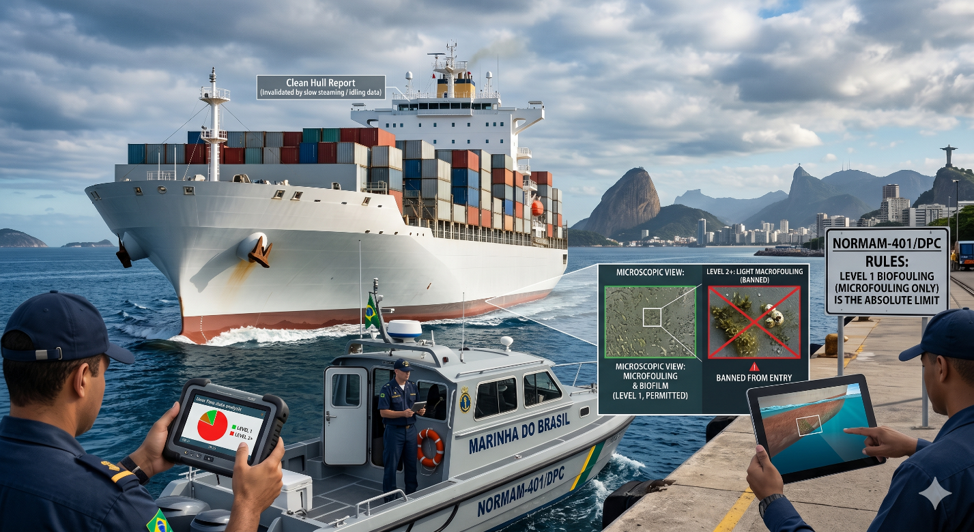
Vessels entering Brazilian waters are only allowed to have Level 1 (Microfouling / Biofilm only) biofouling on their hulls. The strict UWC rules applied in case this is exceeded are as follows:
1. When and Where Should UWC Be Performed?
Pre-Arrival Operation: It is essential that ships arrive in Brazilian territorial waters with a "clean hull." Therefore, it is highly recommended that under water cleaning (UWC) or under water inspection (UWI) procedures be completed at a port prior to entering Brazilian waters or during a transit voyage.
Cleaning Request Within Brazil (The 10-Day Rule): If a ship must undergo under water cleaning at Brazilian ports, this operation cannot be done randomly. An official application must be submitted to the local maritime authority at least 10 days before arriving at the port, and environmental risk assessment approval must be obtained for the cleaning procedure.
2. Conditions for UWC Invalidation (Concrete Speed and Day Limits)
Even if a ship has had its hull cleaned or successfully passed an inspection (UWI), the validity of these procedures is revoked under certain operational violations according to NORMAM-401/DPC rules. A UWC/UWI report is considered invalid and must be renewed in the following situations:
10 Knots and 15 Days Rule: If the ship remains stationary (waiting at anchor/port) for 15 consecutive days for any reason after the UWC process, OR sails at a speed of less than 10 knots, the biofouling risk is considered to have re-emerged, and the previous cleaning/inspection report loses its validity.
Non-compliance with AFS (Anti-Fouling System) Profile: If the sailing profile falls below the operational speed limits specified by the manufacturer of the anti-fouling paint applied on the ship.
Maximum Validity Period: Even if no speed or idling violations have occurred, the document automatically becomes invalid if 1 full year (12 months) has passed since the underwater inspection or cleaning was performed.

3. Record and Reporting (BFMP & BFRB) Requirement
Ships bound for Brazil must record speeds dropping below 10 knots, 15-day waiting periods, and all UWC operations in detail in the Biofouling Record Book (BFRB) in accordance with the Biofouling Management Plan (BFMP). These records are requested as primary evidence during Port State Control (PSC).

· It is not enough for a ship carrying cargo to Brazilian ports to simply have its hull cleaned. If, after cleaning, the ship waits for more than 15 days or arrives in Brazil sailing at a speed below 10 knots, that cleaning will be considered "invalid." It is of vital importance for operators and masters to conduct their voyage planning according to these concrete speed and time limits.


Comments